Welcome to my weekly dispatch of myth, history, and secrets.
Good Friday always carries a strange stillness — it is the time when the world pauses to remember the biggest story ever told. The sequence of events that still shapes how we understand sacrifice, justice, and mystery: the last supper, the betrayal, the investigation, the crucifixion, and the resurrection. Whether approached through faith, history, or narrative craft, it's a reminder of how a single story can echo across millennia.
Old Lores
⭐ The Good Friday Silence
In parts of rural Ireland, people once believed that on Good Friday, just before dusk, the world holds its breath. Birds quiet. Wind stills. Even the sea pauses its rhythm. They said it was the hour when the boundary between the living and the dead thinned — not to let spirits out, but to let memory in. Anyone who stood outside in that hush might hear the footsteps of those they’ve lost, walking beside them for a moment before the world starts again.
⭐The Candle That Cannot Be Blown Out
An old German tale tells of a widow who lit a single beeswax candle every Good Friday in memory of her husband. No matter how she tried, the flame would not go out until the hour of his death had passed. Neighbours whispered that the candle burned with the truth — that on Good Friday, the light you cannot extinguish is the one that still has something to say.
⭐The Stones That Turns Over
In parts of the Scottish Highlands, there’s a belief that certain ancient stones — standing stones, boundary stones, grave markers — turn themselves over at midnight on Good Friday. No one ever sees them move, but villagers claim to find them shifted by morning, damp earth exposed beneath. The old explanation was simple: the stones remember. And once a year, they turn to face the rising light.
⭐⭐⭐
Previously in Bushranger’s Treasure
A photograph that shouldn’t exist led Michelle Cruise to the Gold Coast — and straight into a legend locals whisper about.
Ghostly lights. A bushranger's mark. Gold hidden, but an ancient skeleton found. Roots of a gum tree on the Nerang River have revealed another secret. The dead paid a toll. Is the river giving up its ghosts? Michelle tried to explain the ghost lights. And now, the case is unfolding.
Chapter Six
Part 2 – Bushranger’s Map
Martin pulled out of the building, tyres rolling onto the road. He persuaded Michelle that his car was a better choice, having the police extras like a radio and siren in case of emergency.
The late‑morning sun flashed across the windscreen, catching the faint stubble along his jaw. He adjusted his sunglasses with one hand, the other steady on the wheel.
Michelle sat angled toward him, arms folded, her foot tapping.
“No report on the sovereign yet,” he said before she could ask. His voice was calm, even. “It was logged last night. Forensics will get to it today.”
“I know.” She pushed her hair back. “I just… it feels connected.”
“Everything feels connected to you,” he said, but there was no edge in it — only the familiar warmth of someone who’d been watching her brain work since she was five.
She shot him a sideways glance. “You’re not humouring me, are you?”
He kept his eyes on the road. “I’ve been humouring you for twenty years, Princess.”
She huffed, but the corner of her mouth twitched.
The sealed evidence bag lay in the centre console, the scrap of old paper inside it like a trapped breath.
Michelle glanced at it.
Martin noticed. “So you think Uncle Reg will know what it is?”
She didn’t hesitate. “Without a doubt.”
They turned off the highway toward the leafy street where the Adler house sat half‑hidden behind palms.
Michelle picked up her phone and hit speed dial. “Hello, Professor,” she said, then chuckled. “Martin and I need your expertise. Can we pop in? …Five minutes. Yes, we’re just around the corner. See you soon.”
Martin shot her an inquiring look.
Michelle smiled. “He just put the kettle on.”
He slowed, turning into the familiar country lane and past her family property toward Professor Adler’s driveway. The electric gate was already open. Palm fronds shone gold in the sun.
Martin parked. The engine ticked as it cooled. He reached for the evidence bag. “Okay, let’s go.”
Professor Adler stood in the doorway, waiting — thick grey hair and beard neatly groomed, glasses perched halfway down his nose. His eyes warmed when he saw Michelle.
“Come in, come in,” he said, ushering them through. “You both look as if you’ve brought trouble.”
Michelle didn’t deny it. Martin held up the evidence bag.
Adler’s expression sharpened. “Ah. That kind of trouble.”
He led them onto the shaded terrace — an outdoor living space with rattan chairs and a sofa piled with colourful cushions. The pool shimmered nearby, water cascading over a wall‑mounted Buddha relief in a soft, steady hush.
“Sit down. Coffee or something cold?” Adler asked.
“Your lemonade. Lots of ice,” Michelle said, sinking into the sofa.
“I’ll have the same,” Martin added, placing the evidence sleeve on the table. Sitting beside Michelle, he chuckled. “Almost like when we were kids, huh?”
“Almost.” Michelle smiled back. “The only one missing is Chris.”
Adler returned with a tray of homemade lemonade, setting it on the table between them before taking the chair opposite.
“All right,” he said, rubbing his palms together. “Show me what you’ve brought.”
"It was found in the victim's pocket," Martin said, and passed him the sleeve.
Adler held it delicately, tilting it toward the light. His expression shifted—curiosity sharpening into focus. He adjusted his glasses.
“Rag‑based paper,” he murmured. “Hand-cut edges. Iron‑gall ink… mid to late nineteenth century, I’d say.”
Michelle leaned forward. “So it’s authentic.”
“Oh, unquestionably.” Adler’s thumb traced the air above the map. “See this? Whoever drew it wasn’t guessing. They knew the mark.”
He paused, frowning slightly. “Wait… this reminds me of something.”
Adler rose — quick, with the vigour of a much younger man — and hurried inside. He returned a moment later with a thick, worn volume: Queensland Colonial Survey Fragments, 1860–1890. He set it on the table and opened it. Pages whispered under his fingers until he stopped abruptly.
“There,” he pointed.
Michelle stood, moving beside him. Martin leaned in.
On the page was a faint sketch — the same symbol, drawn in the margin beside a surveyor’s note about an abandoned track near Mackenzie Crossing.
Adler tapped the page lightly. “This mark appears only twice in the surviving records. Once here… and once in a police report that never made it into the official archive.”
Martin straightened. “Why not?”
Adler looked up, eyes behind the glasses serious. “Because the officer who wrote it disappeared before he could file it.”
“If he disappeared before filing it, how could it ever be in the police record?” Michelle pointed out.
“The story is,” Professor Adler lectured, “that Constable Logan was patrolling the area around Birribi — a small township whose name comes from an Aboriginal term for the spirals of dead bark hanging from eucalypts. With the rise of cotton and sugar plantations along the river, the settlement later took on the name Nerang. At some point during his patrol, Logan found the symbol carved somewhere and made notes about it in his field notebook. Whether he intended to report it is unknown. He never returned. Lost? Murdered? Injured and succumbed to the elements? The truth may remain a mystery. But one fact is certain: his horse returned to the station’s stables with the Constable’s notebook still tucked in the saddlebag.”
Adler closed the book gently, fingers resting on the cover as if steadying something fragile.
“What troubles me far more,” he said quietly, “is how a sixteen‑year‑old girl in 2025 ended up with this authentic map. Did she find it, steal it… or inherit it?”
More next Friday.
⭐⭐⭐
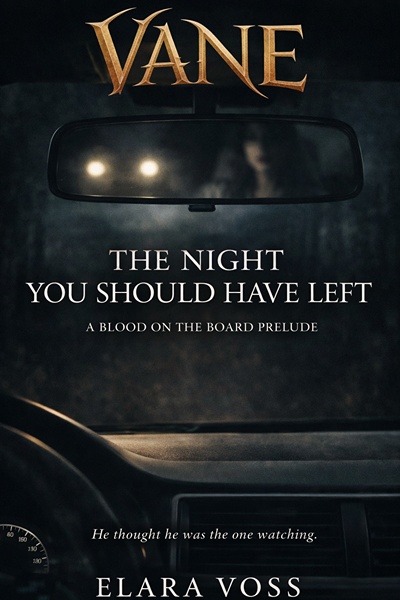
Author Spotlight
⭐Elara Voss:
The Night You Should Have Left
He thought he was the one watching
⭐⭐⭐
Find your next Favorite Book
Promotion Gallore
Fairytales and Myth Retolds:
Happy Easter everybody!